Sunset on a dhow in Muscat: two hours, two forts you cannot enter, and a departure time that moves
Updated September 25, 2026 · 6 min read
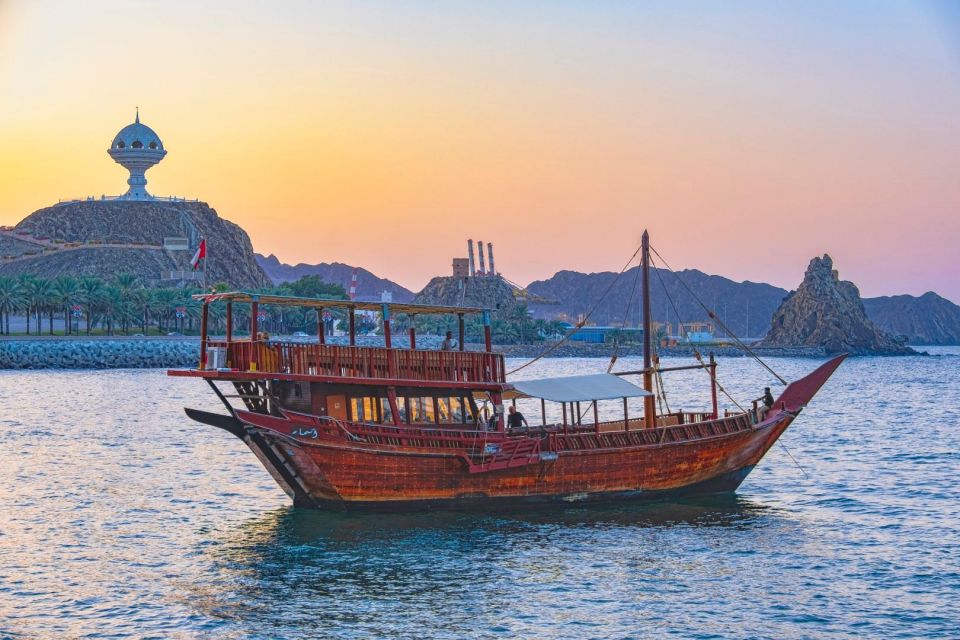
There is a version of Muscat you can only see from the water. The old town sits in a pocket of black rock with the sea on one side and a wall of mountain on the other, and from the land you see it in pieces — a palace here, a fort up there, a stretch of corniche. From half a kilometre offshore at six in the evening it is one thing, and the thing makes sense.
That is the entire case for the dhow cruise, and it is a good one. Our inventory holds 36 boat trips from €21.97, and the evening dhows are the ones people come back talking about.
What the boat sails past
A dhow is the traditional wooden trading vessel of this coast, and the ones running evening cruises are real ones with a deck you can sit on rather than a modern hull with a curved bow bolted on. The standard route out of Marina Bandar Al Rowdha runs north along the coast and takes in, in order:
- Al Bustan Palace, the long white hotel in its own bay, which is the first thing you pass.
- Al Alam Palace, the ceremonial palace of the Sultan, blue and gold and startlingly modern against the rock.
- Al Jalali and Al Mirani, the two Portuguese forts that sit on the cliffs either side of the old harbour entrance.
The forts are the part worth knowing something about, because from the boat they look like the obvious place to visit next and they are not. Both were built by the Portuguese in the 1580s, on the two headlands that control the harbour mouth, and neither is open to the public. Al Jalali was restored in 1983 as a museum of Omani culture reserved for visiting dignitaries; Al Mirani is closed as well. You can photograph them from the water and from the corniche. That is the access.
This is the single most useful thing to take from the trip. People spend an afternoon of their holiday trying to find the entrance.
The departure time moves, and so should you
The cruise runs two hours and it is timed to the sunset, which means the start time shifts through the year. The booking page for the main operator says so directly: trip departure may vary by sunset time. A booking made in November and a booking made in June do not leave at the same hour.
Two consequences:
Confirm the time the day before. Not the time you remember from booking — the time on the voucher, and if the operator sends a message, the time in the message.
Be there early. Departure is from Marina Bandar Al Rowdha, near Al Bustan Palace, and the operator asks you to report fifteen minutes before departure. A boat waiting for one late passenger is a boat losing the light for everyone else, and these captains do not wait long.
If you have booked the hotel pickup option, collection starts an hour before departure. If you are making your own way, allow more time than the map suggests: the marina is south of the old town, past the point where the coast road narrows, and Muscat’s evening traffic along the corniche is real.
What is on board and what is not
Light refreshments, Omani coffee and dates. That is the honest inventory, and it is the right one — this is a two-hour evening cruise, not dinner. Eat before or after.
Alcohol is not permitted on board, and neither are pets. That is stated on the booking page, and it is not an operator preference: alcohol in Oman is restricted to licensed premises, and a tourist boat is not one. Nobody is going to be unpleasant about it; the point is simply that a sundowner is not part of this particular sundown.
Cancellation is a real possibility and it is not about rain. These trips can be called off on the weather forecast or if a minimum number of bookings is not reached — both are named on the booking page. Wind is the usual reason. If the evening is your last one in Muscat, book earlier in the stay and keep the last night free rather than the other way round.
Which one, and when it is the wrong choice
Muscat: Omani Dhow Coastal and Sunset Cruise is the most-reviewed of them — €35.15, 4.6 stars from 212 reviews, two hours, with hotel pickup as an option and a pickup list that runs to most of the city’s hotels. There are shorter and cheaper dhow trips and a handful of private charters; the differences between them are the boat, the refreshments and whether transfers are included, rather than the route, which is much the same for everyone because the coastline is the coastline.
Three situations where this is not the booking to make:
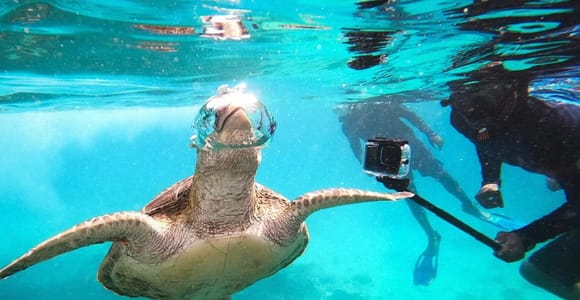
If you want to swim. You will not. This is a sightseeing cruise on a wooden deck; nobody gets in the water. The dolphin trips and the snorkelling boats are the ones that stop.
If the sea is the point rather than the city. Two hours along a built coastline is a city tour that happens to float. If what you want is open water and islands, the Daymaniyat snorkelling day is a different world an hour offshore.
If you have very young children and the timing is late. The evening departure lands a two-hour boat trip squarely in the hour when small children tend to be finished with the day.
What it does uncommonly well is the first evening of a trip. You arrive, you sleep off the flight, and on the second evening you spend two hours looking at the city from the one angle that explains its geography — the mountains behind, the two forts holding the gate, the palace in the middle. Everything you do on land for the rest of the week makes more sense afterwards, which is a strange thing to say about a boat ride and is the reason this one sells.