Dolphin watching off Muscat: take the early boat, and know what you are unlikely to see
Updated September 25, 2026 · 6 min read
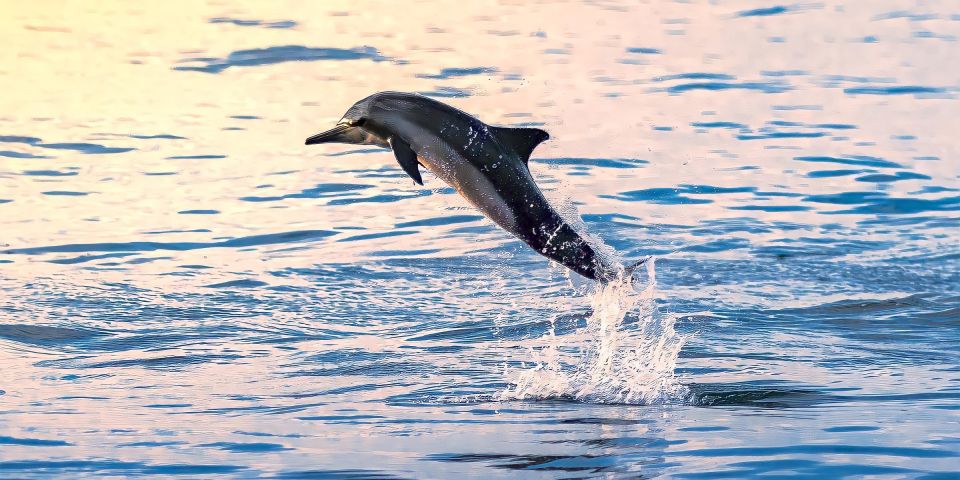
Most wildlife trips sell a season. This one does not, and that changes how you book it. The spinner dolphins off Muscat are here in every month of the year, in pods that are often large, and the operators running the 23 dolphin trips in our inventory from €27.75 do not have a closed period to work around.
What they do have is a time of day, and it matters much more than the calendar.
Book the first boat
Almost every operator on this coast runs from Marina Bandar Al Rowdha, a few minutes south of the old town below Al Bustan, and almost every one of them sells the same two-hour trip several times a morning — commonly eight, ten and midday.
Take the eight.
Two reasons, and neither is about the animals being asleep later. The first is the sea. The Gulf of Oman is usually glassy at dawn and builds a chop through the morning as the land heats up, and a chop does two things: it makes small dolphins much harder to see, and it makes the two hours considerably less pleasant for anyone prone to seasickness. The second is the light. A dolphin breaking the surface at eight is lit from the side. At noon it is a dark shape under a white glare, and every photograph you take will show that.
The corollary is that a cancelled morning trip is not usually rescheduled to the afternoon for your convenience. These boats cancel on the forecast, and the forecast that cancels them is wind.
What the two hours are
A modern boat, a captain who knows where the pods have been working, and a run along the coast south of the marina. Most operators include water and soft drinks; some add snacks. There is no feeding, no swimming with them, and no show. You are on a boat looking at wild animals doing whatever they were doing before you arrived.
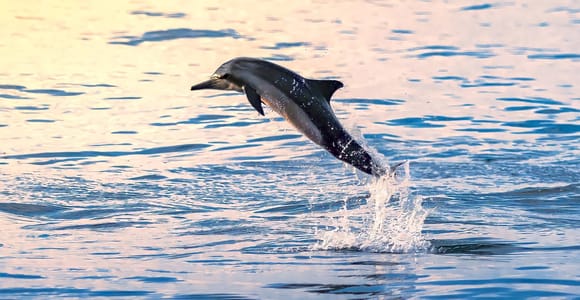
Three species turn up regularly: spinner dolphins, which are the small ones that leap and rotate and are the reason the trips exist; common dolphins, usually in bigger, faster groups; and bottlenose dolphins, larger and less acrobatic. The operators describe sightings as very likely rather than guaranteed, and that is the correct way to put it. No one can promise you a dolphin.
If the boat finds nothing, that is the risk you took. Ask at booking what the operator does in that case — some run a free repeat trip, some do not, and it is a much easier conversation before you pay.
The whales are not a reason to book
Several listings mention whales alongside the dolphins, and two of our tours are sold explicitly as dolphin and whale watching. The honest version of that is worth a paragraph, because it is more interesting than the marketing.
The humpback whales in this sea are a population unlike any other. They do not migrate. While humpbacks everywhere else run between polar feeding grounds and tropical breeding waters, the Arabian Sea group stays put all year, and genetic work published in 2014 found it has been isolated from every other humpback population for roughly seventy thousand years. It is also very small — researchers estimate fewer than a hundred animals off Oman — and it is listed as Endangered, with a case argued for Critically Endangered.
So: yes, there are humpback whales off this coast, and yes, boats occasionally see one. But a hundred animals spread along a long coastline is not a wildlife spectacle you can book. Published guidance on the best months for whales and whale sharks contradicts itself from one source to the next, which is usually the sign that nobody has enough sightings to be sure. Treat a whale here as a story you might come home with, not a thing you paid for.
Who these trips do not suit
Two hours is short, which makes this one of the few boat trips in Muscat that works with young children — but “works” depends on the sea, and a rough morning on a small boat is a bad first experience for a five-year-old. Ask the operator about the forecast when you confirm, not when you arrive.
Anyone who gets seasick should take the first departure and sit outside where the horizon is visible. What helps is the early slot, fresh air and a fixed point to look at; what belongs to a pharmacist or a doctor before you travel is anything you might take.
There is no shade worth the name on most of these boats and there is a great deal of reflected light off the water. Hat, long sleeves, and the sun protection you would use for a beach day rather than for a walk.
Which one to book
The plain version is Muscat: Dolphin Watching Boat Tour — €27.75, 4.5 stars from 400 reviews, and the cheapest way onto the water with dolphins in Muscat. It does one thing.
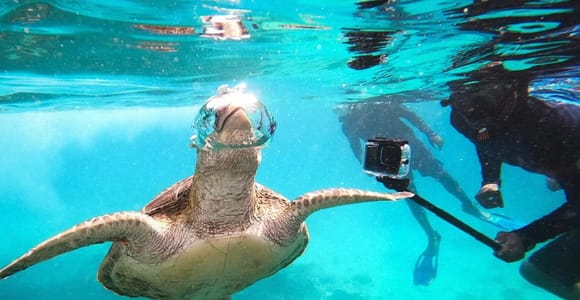
The alternative shape is the combined trip, dolphins plus a snorkelling stop, which usually runs three hours and costs correspondingly more. It is the better value per hour if you were going to snorkel anyway. It is the worse booking if you have a child who will have had enough after ninety minutes, or if you are hoping for a calm morning and the snorkel stop is in an exposed bay.
One thing the combined trips are usually not: a substitute for a proper snorkelling day. If clear water and fish are the point, the snorkelling trips to the Daymaniyat Islands — 54 in our inventory from €37.34 — go somewhere else entirely, an hour offshore into a nature reserve, and the difference is not marginal.
The last practical note is about the marina itself. Bandar Al Rowdha is past the old town, the drive from the hotel strip in Khuwair or Ghubra is longer than the map suggests at rush hour, and a boat that leaves at eight leaves at eight. If your booking includes pickup, it typically starts an hour before departure. If it does not, leave earlier than you think, because the single most common way to miss a dolphin is to miss the boat.